Personal protective equipment (PPE)
Personal protective equipment (PPE) is subject to strict requirements within the European Union. Regulation (EU) 2016/425 governs testing and certification before a product may be placed on the market. Every product must comply with the applicable health and safety requirements. Independent conformity assessment bodies carry out extensive testing and inspections. Employers must ensure that the selected PPE is suitable for the specific risks and working conditions.
PPE categories
PPE is divided into three categories according to the level of risk involved:
| Category I | – | Minimal protection: | Simple PPE for minor risks; no special training requirements. |
| Category II | – | Medium protection: | For moderate risks with significant injury potential. |
| Category III | – | High protection: | Protection against serious or life-threatening hazards such as heat, radiation, chemicals, and biological risks. Regular inspection by notified bodies is required. |
Respiratory protection
EN 149 – Filtering half masks (FFP)
Classification according to multiples of the occupational exposure limit:
- FFP1: Protection up to 4 times the limit value – for non-toxic and low-toxicity dusts.
- FFP2: Protection up to 10 times (half mask) / 15 times (full mask) – for substances hazardous to health.
- FFP3: Protection up to 30 times (half mask) / 400 times (full mask) – for highly toxic particles.
EN 12941 – Powered filtering devices with helmet or hood
Three protection levels (maximum inward leakage):
- TH1: < 15%
- TH2: < 2%
- TH3: < 0.2%
Protective gloves








EN 420 / EN ISO 21420 – General requirements for protective gloves
Basic standard for all protective gloves. Mandatory information on each glove:
- Name of the manufacturer
- Glove designation and size
- CE marking
- Relevant pictograms, performance levels, and standard references
EN ISO 21420 is the current revised edition.
EN 388 – Protective gloves against mechanical risks
Performance levels are shown as a sequence [a.b.c.d.e.f]:
| Letter | Characteristic | Performance level |
|---|---|---|
| a | Abrasion resistance (cycles) | 0 (<100) – 4 (≥8,000) |
| b | Cut resistance (coup test) | 0 (<1.2) – 5 (≥20) |
| c | Tear resistance (newtons) | 0 (<10 N) – 4 (≥75 N) |
| d | Puncture resistance (newtons) | 0 (<20 N) – 4 (≥150 N) |
| e | Cut resistance according to TDM / ISO 13997 | A (≥2 N) – F (≥30 N) |
| f | Impact protection | P = pass |
EN 374 / EN ISO 374 – Protection against chemicals and microorganisms
Three performance types (since ISO 374-1:2016):
- Type A: Permeation resistance of at least 30 minutes against at least 6 test chemicals.
- Type B: At least 30 minutes against at least 3 test chemicals.
- Type C: At least 10 minutes against at least 1 test chemical.
Code letters below the pictogram indicate the chemicals tested (A = methanol, B = acetone, C = acetonitrile, D = dichloromethane, E = carbon disulfide, F = toluene, G = diethylamine, H = tetrahydrofuran, I = ethyl acetate, J = n-heptane, K = NaOH 40%, L = H2SO4 96%, M = HNO3 65%, N = acetic acid 99%, O = ammonia solution 25%, P = H2O2 30%, S = hydrofluoric acid 40%, T = formaldehyde 37%).
EN 374-5 / Microorganisms: Protection against bacteria and fungi, and additionally against viruses where marked “VIRUS” (tested with bacteriophage Phi-X174).
EN 407 – Protection against thermal hazards
| Letter | Test | Performance level |
|---|---|---|
| a | Burning behavior | 0-4 |
| b | Contact heat | 0-4 |
| c | Convective heat | 0-4 |
| d | Radiant heat | 0-4 |
| e | Small splashes of molten metal | 0-4 |
| f | Large quantities of molten metal | 0-4 |
Higher values indicate better protection. “X” means not tested. A value below 3 means the product must not come into direct contact with an open flame.
EN 421 – Protection against ionizing radiation and radioactive contamination
- Liquid-tight construction and successful penetration testing according to EN ISO 374
- Successful air-pressure leak testing
- High resistance to water-vapor penetration
- A defined lead content or equivalent metal shielding for radiation protection
EN 455 – Single-use medical gloves
- Part 1 – Freedom from holes: Filled with 1,000 ml of water; AQL of at least 1.5.
- Part 2 – Physical properties: Dimensions and tear resistance; at least 13 test gloves per batch.
- Part 3 – Biological evaluation: Limit values for chemicals, endotoxins, powder, and proteins.
- Part 4 – Shelf life: Typically 5 years from the date of manufacture.
EN 511 – Protective gloves against cold
- Convective cold: Level 0-4
- Contact cold: Level 0-4
- Water resistance: 0 (not waterproof) or 1 (waterproof)
Higher values indicate better protection. “X” means not tested.
EN 12477 – Protective gloves for welders
- Type A: Higher protection requirements; recommended for heavier welding applications.
- Type B: Greater freedom of movement; preferred for TIG welding.
Must also meet EN 420 / EN ISO 21420 and includes extended forearm protection against welding spatter.
EN 16350 – Electrostatic properties (gloves)
For use in potentially explosive environments:
- Volume resistance Rv < 1.0 x 10^8 ohms (less than 100 megaohms)
- Tested according to EN 1149-2 at 23 +/- 1 C and 25 +/- 5% relative humidity
- All 5 samples must comply with the limit value
Protective clothing




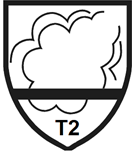


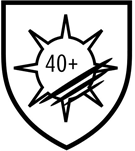



Protective clothing (PPE Category III) is divided into six types in ascending order of protection:
| Type | Protection |
|---|---|
| Type 6 | Limited protection against light spray |
| Type 5 | Particle-tight |
| Type 4 | Spray-tight |
| Type 3 | Liquid-tight |
| Type 2 | Non-gas-tight |
| Type 1 | Gas-tight |
For Types 6 to 4, breathable materials may be used depending on the required barrier performance and the working conditions.
EN ISO 13688 – General requirements for protective clothing
General performance requirements cover ergonomics, safety, size designation, aging, compatibility, and marking. This standard must always be used together with product-specific standards; on its own it does not prove protective performance.
EN 13034 – Protection against liquid chemicals (Type 6)
Protection against light splashes and aerosols from low-risk chemicals. Limited protective performance (Type 6 and Type PB[6]). Not suitable for concentrated or aggressive chemicals.
EN ISO 13982 – Protection against solid particles (Type 5)
- Part 1: Performance requirements for full-body protection against airborne solid particles
- Part 2: Test method for determining the inward leakage of aerosols
EN 14605 – Protection against liquid aerosols (Type 4)
Spray-tight seams and connections for protection against liquid aerosols. Partial-body protection is designated PB4 (for example sleeves or aprons).
EN 14605 – Protection against liquid chemicals (Type 3)
Liquid-tight seams and connections for protection against liquid jets. Partial-body protection is designated PB3 (for example sleeves or aprons).
EN 943-1 – Ventilated, non-gas-tight protective suits (Type 2)
- How it works: These suits are not gas-tight but are kept under positive pressure by an external air supply, for example an airline breathing apparatus, to prevent hazardous substances from entering.
- Current status: Within the EU, Type 2 has largely been replaced by gas-tight suits (Type 1) or specialized ventilated suits. However, the Type 2 category still exists in international standards such as ISO 16602.
- Distinction: Whereas Type 1 offers the highest level of protection because it is gas-tight, Type 2 is intended for situations in which continuous ventilation provides protection even though the suit itself may allow minor leakage.
EN 943-2 – Ventilated, gas-tight protective suits (Type 1)
A Type 1 gas-tight protective suit functions like a mobile, hermetically sealed capsule. Its main purpose is to completely isolate the wearer from the hazardous external atmosphere.
1. The barrier (material)
The suit is made from high-performance materials, often coated plastics such as Viton, butyl, or laminates, that do not allow gases, liquids, or particles to pass through. All seams are welded or specially taped so that no weak points remain.
2. The breathing-air supply
Because the suit is gas-tight, the wearer cannot simply breathe the surrounding air. The three main variants are:
- Type 1a: The breathing apparatus is worn inside the suit.
- Type 1b: The breathing apparatus is worn outside the suit.
- Type 1c: Air is supplied from outside via a hose system.
3. The pressure principle
During use, a slight positive pressure often develops inside the suit, especially in Type 1a due to exhaled air from the mask. This positive pressure is an additional safety factor: if the suit has minor damage, clean air flows from the inside to the outside and helps prevent toxic substances from entering.
4. Ventilation (exhaust valves)
To prevent the suit from inflating excessively because of the continuous airflow, it is equipped with pressure-relief valves. These release excess air in a controlled manner while immediately blocking any inward flow from outside.
5. Components that ensure gas-tightness
- Gas-tight zipper: A special, usually rubberized closure system.
- Integrated boots and gloves: Either permanently welded to the suit or connected by sealing rings in a fully gas-tight manner.
- Visor: A large panoramic viewing area integrated into the suit material in a gas-tight way.
ISO 14644 – Cleanrooms
Defines procedures for particulate cleanliness in cleanrooms. Cleanroom classes range from ISO 1 (cleanest) to ISO 9.
| Class | ≥ 0.1 µm | ≥ 0.2 µm | ≥ 0.5 µm | ≥ 1.0 µm | ≥ 5.0 µm |
|---|---|---|---|---|---|
| ISO 1 | 10 | – | – | – | – |
| ISO 2 | 100 | 24 | – | – | – |
| ISO 3 | 1,000 | 237 | 35 | – | – |
| ISO 4 | 10,000 | 2,370 | 352 | 83 | – |
| ISO 5 | 100,000 | 23,700 | 3,520 | 832 | – |
| ISO 6 | 1,000,000 | 237,000 | 35,200 | 8,320 | 293 |
| ISO 7 | – | – | 352,000 | 83,200 | 2,930 |
| ISO 8 | – | – | 3,520,000 | 832,000 | 29,300 |
| ISO 9 | – | – | 35,200,000 | 8,320,000 | 293,000 |
EN 369 – Protection against liquid chemicals (material)
Test method for determining the resistance of materials to the permeation of liquids. Used as a basis for other protective standards.
EN 1149 – Electrostatic properties (protective clothing)
Requirements for electrically conductive protective clothing to reduce spark formation and explosion risks. The clothing must be grounded, for example via conductive footwear.
- EN 1149-1: Surface resistance | EN 1149-2: Volume resistance
- EN 1149-3: Charge decay | EN 1149-5: Performance requirements
EN 1073 – Protection against radioactive contamination (clothing)
Three performance classes (nominal protection factor against aerosols, 0.6 µm):
- Class 1: Protection factor 5 | Class 2: Protection factor 50 | Class 3: Protection factor 500
Part 1: Ventilated clothing. Part 2: Unventilated clothing.
Protects against contamination by radioactive particles, not against radiation itself.
EN 14126 – Protection against infectious agents
| Type | Description |
|---|---|
| 6-B | Limited protection against spray mist |
| 5-B | Protection against airborne solid particles |
| 4-B | Protection against spray aerosols |
| 3-B | Protection against pressurized liquids |
| 2-B | Non-gas-tight |
| 1a / 1b / 1c-B | Gas-tight |
EN ISO 14116 – Limited flame protection
- Index 1: No flame spread, no burning drips, and no afterglow
- Index 2: Same as Index 1, plus no hole formation
- Index 3: Same as Index 2, plus no afterflame
EN 531 / EN ISO 11612 – Protection against heat and flame
For brief flame contact and at least one type of heat exposure. Classification:
- A: Limited flame spread
- B1-B3: Convective heat
- C1-C4: Radiant heat
- D1-D3: Molten aluminum splashes
- E1-E3: Molten iron splashes
- F1-F3: Contact heat
EN ISO 11611 – Protective clothing for welding
- Class 1: At least 15 drops of molten metal without a temperature increase above 40 K; RHTI at least 7 s.
- Class 2: At least 25 drops; RHTI at least 16 s.
Letter A: A1 = surface flame exposure for 10 s; A2 = edge flame exposure for 10 s.
EN 14058 – Protection against cool environments
For environments from -5 C onward. Performance classes for thermal resistance RcT (m² K/W):
- Class 1: 0.06-0.12 | Class 2: 0.12-0.18 | Class 3: 0.18-0.25
Other optional measurements include air permeability, waterproofness, and thermal insulation.
EN 17353 – Enhanced visibility for medium-risk situations
| Type | Use | Material |
|---|---|---|
| A | Daylight only | Fluorescent material |
| B | Darkness only | Retroreflective material |
| AB | Daylight, twilight, and darkness | Combined fluorescent and retroreflective material |
EN ISO 27065 – Protection for operators handling plant protection products
- C1 – Low risk: Minimum resistance; not suitable for concentrates.
- C2 – Medium risk: Higher protective performance; not suitable for concentrates.
- C3 – High risk: Protection against permeation; also suitable for concentrates.
EN 343 – Protection against rain
| Class | Resistance to water penetration | Water-vapor resistance (Ret) |
|---|---|---|
| 1 | – | Ret > 150 |
| 2 | > 800 mm H2O | 20 < Ret <= 40 |
| 3 | > 1,300 mm H2O | Ret < 20 |
| 4 | ≥ 20,000 mm H2O | Ret < 10 |
R or X: R = tested for top-down rain exposure; X = not tested.
EN 381 / EN ISO 11393 – Protective clothing for chainsaw users
Leg protection types:
- Type A: Front protection covering part of each leg (180 degrees).
- Type B: Same as Type A, with additional inner-leg protection on the left leg.
- Type C: Full all-round protection (360 degrees) for both legs.
| Class | Chain speed |
|---|---|
| 1 | 20 m/s |
| 2 | 24 m/s |
| 3 | 28 m/s |
EN 14325 – Test methods for chemical protective clothing
Reference standard for physical performance characteristics such as abrasion resistance, flex-cracking resistance, tear propagation resistance, burst resistance, tensile strength, puncture resistance, permeation resistance, and seam strength.
EN 13758 – UV protection (textiles)
| UPF range | Protection | % shielding |
|---|---|---|
| 15-24 | Good | 93.3-95.8% |
| 25-39 | Very good | 96.0-97.4% |
| 40-50+ | Excellent | 97.5-98+% |
The protective effect may decrease if the clothing is wet or worn.
EN 61482 / IEC 61482-1-2 – Protection against arc flash
- Class 1 (4 kA): Basic protection against thermal arc hazards
- Class 2 (7 kA): Increased protection
Protection against electric shock is not covered by this standard.
Medical face masks
EN 14683 – Medical face masks
- Type I: Low protection; suitable for patients.
- Type II: Higher bacterial filtration efficiency; intended for medical staff.
- Type IIR: Same as Type II, with additional splash resistance.
Accompanying ISO symbols (ISO 15223-1)
Because medical masks are often single-use products, standardized symbols according to ISO 15223-1 are commonly used:
- Crossed-out 2: Symbol for single use.
- Factory symbol: Name and address of the manufacturer.
- Hourglass: Expiry date of the masks.
- Lot symbol: Batch number for traceability.
Safety footwear
EN ISO 20345 – Safety footwear (200 joules)
| Category | Characteristics |
|---|---|
| SB | Basic footwear with a protective toe cap |
| S1 | SB + antistatic properties + energy absorption in the heel + closed heel area |
| S2 | S1 + water-repellent upper |
| S3 | S2 + puncture-resistant midsole + profiled outsole |
| S4 | S1 + polymer upper (fully waterproof) |
| S5 | S4 + steel midsole |
Optional additional markings: A (antistatic), E (energy absorption in the heel), FO (oil-resistant outsole), P (puncture resistance), HRO (heat-resistant outsole), WR (waterproof), SRA / SRB / SRC (slip resistance), and others.
EN ISO 20344 – Test methods for footwear
Defines uniform test procedures for safety footwear, protective footwear, and occupational footwear. It forms the basis for EN ISO 20345, EN ISO 20346, and EN ISO 20347.
EN 344 / EN 345 / EN 346 / EN 347 – Former footwear standards
The standards EN 344, EN 345, EN 346, and EN 347 defined the basic requirements for safety footwear, protective footwear, and occupational footwear used in commercial environments.
- EN 344: General requirements and test methods for safety, protective, and occupational footwear.
- EN 345: Safety footwear with a 200-joule toe cap impact rating.
- EN 346: Protective footwear with a 100-joule toe cap impact rating.
- EN 347: Occupational footwear without a protective toe cap.
ESD (Electrostatic Discharge) – Electrostatic discharge
Footwear is classified as ESD footwear when its electrical resistance lies between 10^5 and 10^7 ohms. It should be used wherever electrostatic charges must be safely dissipated in order to protect sensitive electronic components.
Contamination, moisture, and repeated flexing can significantly change the electrical resistance.
High-visibility clothing / visibility
EN ISO 20471 – High-visibility warning clothing
| Class 3 | Class 2 | Class 1 | |
|---|---|---|---|
| Background material (m²) | 0.80 | 0.50 | 0.14 |
| Retroreflective material (m²) | 0.20 | 0.13 | 0.10 |
Class 3 provides the highest visibility. Reflective material must be positioned around the torso and arms.
Meaning of the protection classes
- Class 1 (lowest level): Suitable for environments with low traffic risk, for example company premises with speeds up to 30 km/h.
- Class 2 (intermediate level): Standard for work in road traffic at speeds up to 50 km/h. Typical for classic sleeveless high-visibility vests.
- Class 3 (highest level): Required for high-risk areas such as motorways (over 50 km/h) or railway environments.
Important difference: Unlike EN 17353, which covers medium-risk situations, EN ISO 20471 is required for high-risk situations where visibility at long distance is essential both day and night.
Oeko-Tex® Standard 100
The Oeko-Tex® Standard 100 label confirms that all components of an item – including threads, buttons and accessories – have been tested for harmful substances and are harmless to health.
- Class 1:Products for babies – the strictest requirements.
- Class 2:Products with direct skin contact (e.g. underwear, shirts).
- Class 3:Products without direct skin contact (e.g. jackets, vests).
- Class 4:Furnishing materials (e.g. table linen, curtains, upholstery fabrics).